Latest
4 juni 2026
Reduce In-Store Administration: 4 Strategies to Support the Store Manager
We gathered some of Sweden’s leading retailers for a breakfast event to discuss the increasing complexity of physical stores, and how we can support store managers who face ever-growing demands.
A Challenging Equation: More Tech, More Admin, and More Stress
During the morning, we dove into the data that shapes the store manager's daily life. Figures from sources as Brightpearl, IHL Group, and Försäkringskassan (the Swedish Social Insurance Agency) show that three independent factors have been moving in the same direction since 2010:
In-store technology has increased by 200%
Administration has increased by 130%
Meanwhile, there has been a 65% increase in stress-related sick leave within the retail sector.
Today, a store manager is expected to handle dozens of broad areas of responsibility within a standard 40-hour workweek. This ranges from traditional leadership to a multitude of new demands that have emerged just over the last few years.
The Gap Between Head Office and the Store
In the midst of this challenging environment, it is also evident that communication falls short. Axonify’s The Deskless Report 2024 highlights a major perception gap between how head office believes information is landing and how it is actually received in store:
The Communication Gap: 62% of head office respondents feel that communication to stores works well. But in-store, only 39% agree.
Reaching the Floor: A staggering 87% of head office respondents believe they reach their frontline employees. Among the staff in-store, only 56% feel that the information actually gets through.
When technology, administration, and information flows increase simultaneously, the store manager becomes the hub expected to make it all work. However, when communication fails to reach the floor, even the best strategies risk getting stuck at the head office.
With this in mind, we asked a question during the breakfast:
"What would you change about the store manager's role, daily routine, or working conditions?"
The room included representatives from retailers such as Åhléns, Stadium, Plantagen, Systembolaget, Kicks, and Jula. Thanks to their extensive, real-world experience in retail, we identified four central themes that the industry must actively address:
1. More Leadership, Less Administration
One of the strongest and most recurring points in the discussion was that store managers today have too little room for what is truly the core of their role: leadership. Administration is taking up more and more space, increasing year by year. This means time that should be spent seeing, supporting, and developing employees is instead consumed by system logins, reporting, and administrative tasks. For store managers to be the leaders their stores and teams need, there must be an active effort to reduce the administrative burden and clear a real path for daily leadership.
2. Delegation as a Tool for Engagement and Growth
A key for freeing up the store manager's time is having strong opportunities to delegate responsibility. This isn't just about offloading tasks, because when employees are given and can easily take responsibility, it boosts their engagement and sense of ownership, lifting the performance of the entire store. Employees want to be seen and feel that they are making a genuine contribution. Done right, delegation also creates a natural path for employees to grow in their roles, highlighting new rising stars who want to pursue a career in retail. In other words, it is a tool that benefits the individual, the store manager, and the organization as a whole.
3. A Structured Flow of Information to Stores
Information reaching the store today is often perceived as unstructured and difficult to navigate. For a store manager to absorb and act on information, it needs to be well-thought-out, prioritized, and come from a clear sender. More structure and deliberation are required behind how and when information is communicated, ensuring that what is critical is actually recognized as critical and doesn't get drowned out in a constant stream of messages.
4. Cohesive Initiatives That Actually Land
Today, there are many initiatives for change, and while the intentions behind them are good, they rarely connect with each other. When different initiatives do not align, they create greater complexity rather than simplification. For the store manager, this means more systems to manage, more requirements to adhere to, and a harder time seeing the big picture. How do we better equip store managers to navigate a daily routine with more initiatives and higher demands? The answer seems to lie in working more cohesively and designing initiatives with the reality of the store in mind and ensuring the various pieces actually connect.
StoreSprint – Part of the Solution
The discussions during the breakfast confirmed that the challenges we address with StoreSprint are highly relevant and that the need for change is substantial.
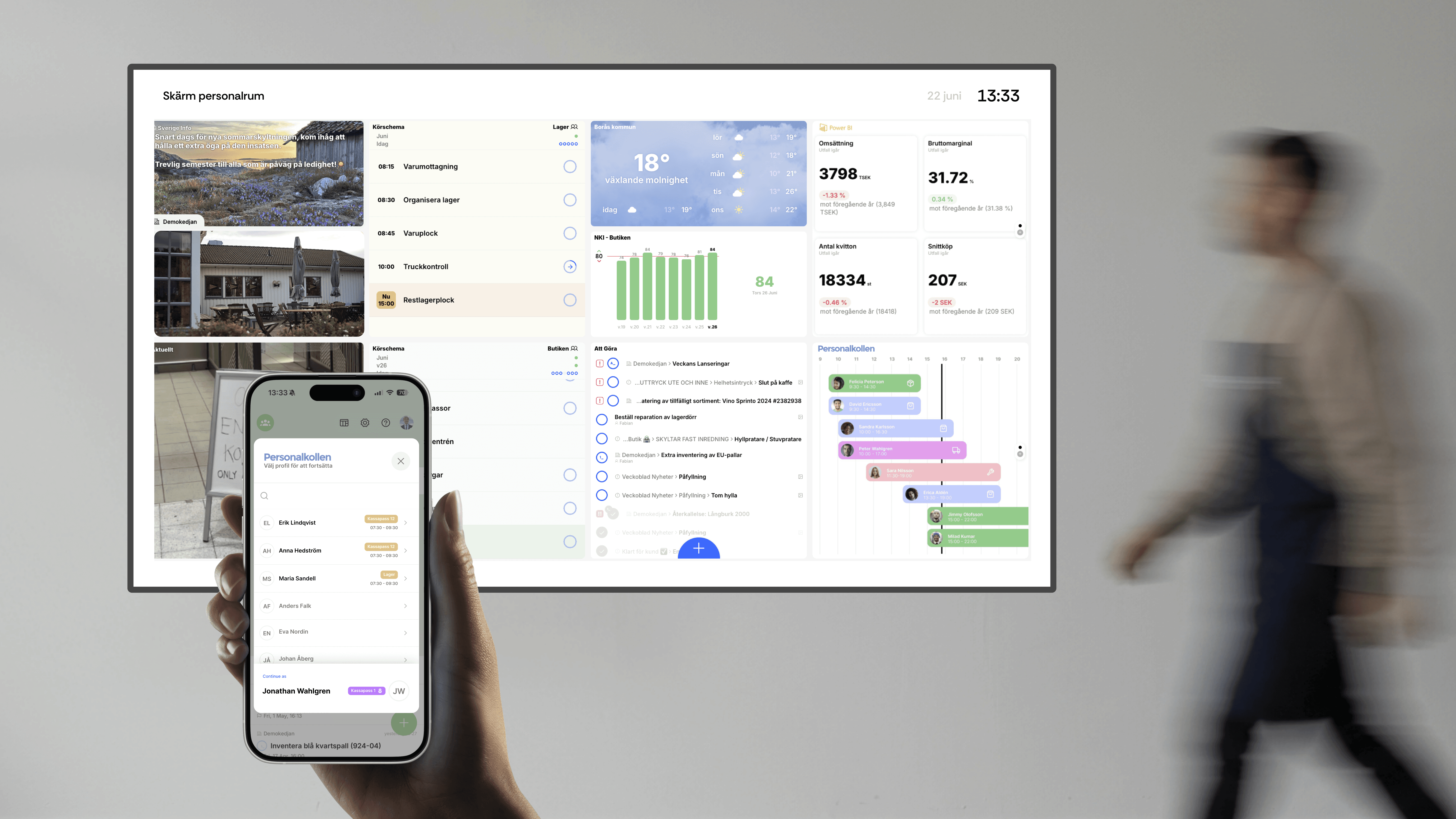
StoreSprint serves as the central hub for store operations. It is a digital platform where information, daily routines, follow-ups, and delegation come together in one place and directly in the hands of the employees on the store floor.
By streamlining store operations into a structured flow, we help retailers save time, close the communication gap with the head office, and give store managers the tools they need to be the leaders their stores deserve.
More Posts